2017 f 150 manual
2017 Ford F-150 Manual: A Comprehensive Overview
The 2017 Ford F-150 offered drivers a choice between two automatic transmissions: a proven 6-speed and a newly introduced 10-speed option,
enhancing performance and capability.
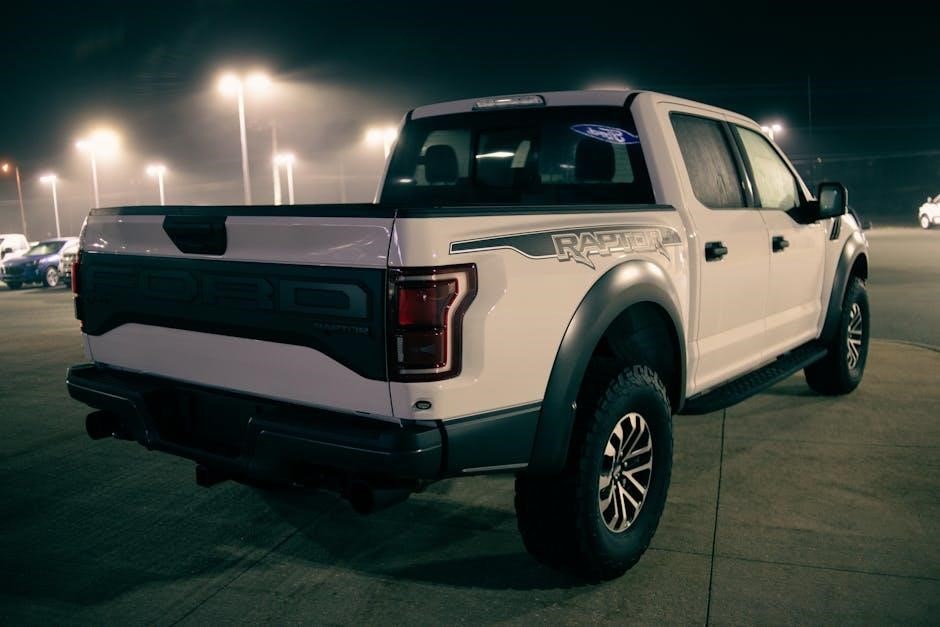
The 2017 Ford F-150 represented a significant evolution in the full-size pickup truck segment, building upon the aluminum-bodied revolution initiated in the prior model year. This iteration focused on refining the powertrain options and introducing advanced technologies to enhance both performance and efficiency. A key highlight of the 2017 F-150 was the availability of a brand-new 10-speed automatic transmission, paired with the 3.5L EcoBoost V6 engine, marking Ford’s commitment to transmission innovation.
While the reliable 6-speed automatic remained as a standard offering for certain engines, the 10-speed aimed to deliver smoother shifts, improved acceleration, and optimized fuel economy. This introduction broadened the F-150’s appeal, catering to a wider range of drivers and usage scenarios, from daily commuting to demanding towing applications. The 2017 model year solidified the F-150’s position as a leader in the competitive truck market.
Engine Options and Transmission Availability
The 2017 Ford F-150 offered a diverse range of engine choices, each with specific transmission pairings to maximize performance and efficiency. The base engine was a 3.5L V6, typically coupled with the 6-speed automatic transmission. Stepping up, the popular 5.0L V8 also primarily utilized the 6-speed, providing a balance of power and capability. However, the real shift occurred with the EcoBoost engines.
The 2.7L EcoBoost V6 could be found with either the 6-speed or the new 10-speed automatic, offering buyers a choice. Most notably, the high-output 3.5L EcoBoost V6 was exclusively paired with the 10-speed transmission, unlocking its full potential. This pairing delivered enhanced acceleration and towing capacity. The introduction of the 10-speed broadened the F-150’s appeal, catering to diverse needs and preferences.
Transmission Details
Ford’s 2017 F-150 presented two distinct automatic transmission options: the well-established 6-speed (6R80) and the innovative 10-speed automatic, each with unique characteristics.
The 6-Speed Automatic Transmission (6R80)
The 6R80 six-speed automatic transmission was a mainstay in the Ford F-150 from 2015 through 2017. Known for its reliability and simplicity, it provided a smooth and dependable driving experience for many truck owners. Powertrain Products offers fully remanufactured 6R80 transmissions, boasting a 7-year, million-mile warranty and core fee waiver, highlighting its continued relevance.
This transmission was considered a standard option, offering a balance between performance and fuel efficiency. While the 10-speed eventually superseded it, some drivers preferred the 6R80 for its straightforward operation. It remained a viable choice for those prioritizing proven technology over the latest advancements.
Years of Availability (2015-2017)
The 6R80 six-speed automatic transmission saw its run in the Ford F-150 from the 2015 model year through 2017. This three-year period established the 6R80 as a reliable and well-regarded component within the F-150 lineup. While Ford continued to innovate with transmission technology, the 6R80 served as a dependable foundation for many truck owners during these years.
The introduction of the 10-speed automatic transmission in 2017 signaled a shift towards more advanced gear ratios and improved performance. However, the 6R80 remained available as an option, catering to drivers who preferred its established dependability. Its availability during these years provides a range of choices for F-150 buyers.
Engine Pairing with the 6R80
The 6R80 six-speed automatic transmission was primarily paired with the 5.0L V8 engine option in the 2017 Ford F-150. This combination delivered a balance of power and efficiency, making it a popular choice for truck owners. Powertrain Products specifically highlights the 6R80’s compatibility with the 5.0L engine within the 2015-2017 F-150 models.
While other engine options were available for the F-150 during these years, the 6R80 was most commonly found alongside the 5.0L V8; This pairing offered a smooth and responsive driving experience, suitable for both daily commutes and moderate towing needs. The 6R80’s robust design complemented the V8’s power output effectively.
The 10-Speed Automatic Transmission
Ford introduced the innovative 10-speed automatic transmission on the 2017 F-150, marking a significant advancement in truck technology. This new transmission was initially paired with the 3.5 Liter EcoBoost V6 engine, offering improved fuel efficiency and enhanced performance capabilities. It represented Ford’s commitment to pushing the boundaries of transmission evolution within the pickup truck segment.
The 10-speed design allowed for closer gear ratios, optimizing engine output for various driving conditions. This resulted in quicker acceleration, smoother shifting, and improved overall responsiveness. U.S. News & World Report noted the availability of this 10-speed with select engines, highlighting its importance as a new feature for the 2017 model year.
The year 2017 witnessed a pivotal shift in Ford F-150 transmission technology with the debut of the 10-speed automatic. This wasn’t merely an upgrade; it signified Ford’s position at the forefront of transmission innovation within the truck market. Initially, this advanced transmission was specifically engineered to work in conjunction with the 3.5 Liter EcoBoost V6 engine, maximizing its potential.
This introduction aimed to deliver a more refined driving experience, offering benefits like improved fuel economy and enhanced towing capabilities. The 10-speed’s closer gear ratios allowed the engine to operate more efficiently, adapting seamlessly to diverse driving scenarios. It represented a substantial leap forward from the previous six-speed option, setting a new standard for F-150 performance.
Engine Compatibility with the 10-Speed
While initially paired with the 3.5L EcoBoost V6 in 2017, the 10-speed automatic transmission’s compatibility expanded throughout the F-150 lineup. It wasn’t a universal fit across all engine options immediately; however, it became available with select engines as the model year progressed. This strategic rollout allowed Ford to fine-tune the transmission’s calibration for optimal performance with different powerplants.
The 5.0L V8 engine also gained compatibility with the 10-speed, offering drivers a choice between the six-speed and the more advanced ten-speed options depending on their specific needs and preferences. This broadened availability ensured a wider range of F-150 configurations could benefit from the improved efficiency and responsiveness of the 10-speed transmission.
Performance and Driving Experience
The 2017 F-150’s driving experience varied significantly based on the transmission chosen, with the 6-speed and 10-speed offering distinct shifting characteristics and responsiveness.
Shifting Characteristics of the 6-Speed
The 6-speed automatic transmission (6R80), utilized in the 2017 Ford F-150 from 2015-2017, generally provides a straightforward and predictable driving experience; Drivers often describe the shifts as smooth and reliable, particularly during normal driving conditions. It’s known for its simplicity and durability, offering a more traditional feel compared to the newer 10-speed.
However, it doesn’t offer the same level of refinement or responsiveness as the 10-speed, especially when demanding quicker acceleration or navigating challenging terrain. While adequate for everyday use and lighter towing, some drivers may notice a slight delay in downshifting or a less-than-optimal gear selection in certain situations. Overall, the 6-speed prioritizes dependability over cutting-edge performance.
Shifting Characteristics of the 10-Speed
The introduction of the 10-speed automatic transmission in the 2017 Ford F-150 aimed to elevate performance and efficiency. This transmission delivers quicker acceleration and more precise gear selection, offering a noticeably more responsive driving experience. The increased number of gears allows the engine to operate within its optimal power band more frequently, improving both power delivery and fuel economy.
However, early iterations of the 10-speed received some criticism. Owners have reported experiencing occasional low-speed clunkiness and a somewhat “mushy” shifting feel during moderate acceleration. While these issues aren’t widespread or debilitating, they can detract from the overall driving experience. Despite these reports, the 10-speed generally provides a smoother and more refined ride than its 6-speed counterpart.
Reported Issues: Low-Speed Clunkiness
A recurring complaint among owners of 2017-2023 Ford F-150s equipped with the 10-speed automatic transmission centers around noticeable clunkiness at lower speeds. This sensation is often described as a harsh engagement when shifting between gears during maneuvers like parking or slow-speed cruising. The issue appears to be more prevalent in colder temperatures, suggesting a potential link to fluid viscosity or internal transmission components.
While not indicative of a major mechanical failure, this clunkiness can be unsettling for drivers. Online forums, such as Mustang Forums at StangNet, frequently discuss this phenomenon. Some owners report the issue diminishes over time, while others suggest software updates may offer some improvement. It’s important to note that this issue doesn’t appear to affect the transmission’s overall reliability.
Reported Issues: Mushy Shifting & Moderate Acceleration
Alongside the low-speed clunkiness, some 2017-2023 Ford F-150 owners with the 10-speed transmission have reported experiencing “mushy” shifting, particularly during moderate acceleration. This sensation is characterized by a delayed or imprecise gear change, creating a feeling of sluggishness or hesitation. Drivers describe a lack of crispness in the transmission’s response when applying moderate pressure to the accelerator.
Discussions on platforms like Mustang Forums at StangNet indicate this isn’t a widespread issue, but it’s a noticeable concern for those affected. Some speculate it may be related to the transmission control module’s programming or the transmission’s adaptive learning algorithms. While not debilitating, this “mushy” feel detracts from the overall driving experience and can be frustrating during everyday driving scenarios.

Towing and Payload Capacity
The transmission choice in the 2017 F-150 significantly impacts its towing and payload capabilities, influencing how much weight the truck can safely handle.
Impact of Transmission on Towing
The 2017 Ford F-150’s towing capacity is demonstrably affected by the transmission equipped. Vehicles featuring the 10-speed automatic generally exhibit higher maximum towing ratings compared to those with the 6-speed. This is largely due to the 10-speed’s wider gear ratio spread, allowing the engine to operate more efficiently within its optimal power band when hauling heavy loads.
The closer gear ratios also contribute to improved control and reduced strain on the powertrain during towing. While the 6-speed is capable, the 10-speed provides a more confident and refined towing experience, particularly with larger trailers. Engine pairing also plays a crucial role; the 3.5L EcoBoost V6, when coupled with the 10-speed, unlocks the highest towing figures for the 2017 F-150.
Payload Capacity Differences
Similar to towing, the 2017 Ford F-150’s payload capacity varies depending on the transmission choice, though the impact is often less pronounced than with towing figures. Generally, configurations equipped with the 10-speed automatic transmission can support slightly higher payloads. This stems from the transmission’s ability to manage engine output more effectively, optimizing weight distribution and overall vehicle stability when carrying substantial cargo.
However, payload is heavily influenced by other factors like cab configuration, bed length, and axle ratio. While the 10-speed offers a marginal advantage, selecting the right engine and options package is paramount for maximizing payload. The 6-speed remains a viable option for those prioritizing everyday usability over extreme hauling needs, providing a solid payload capacity for typical tasks.

Reliability and Maintenance
Both the 6-speed and 10-speed transmissions require routine fluid checks and changes; however, the 10-speed has reported some early issues with clunkiness.
Common Transmission Problems (Both Types)
While generally robust, both the 6-speed (6R80) and 10-speed automatic transmissions in the 2017 Ford F-150 have exhibited some common issues reported by owners. The 10-speed, being newer, has garnered more attention for its quirks. Many drivers have noted a sensation of “clunky shifting” particularly at lower speeds during maneuvering or gentle acceleration. This isn’t always indicative of a serious failure, but can be unsettling.
Another frequently mentioned concern with the 10-speed is “mushy shifting” or a delayed response during moderate acceleration. This can feel less precise and somewhat hesitant. The 6-speed, while simpler, isn’t entirely immune to problems; although less frequently reported, issues with solenoid failures and valve body malfunctions can occur over time, leading to erratic shifting behavior. Regular maintenance, including fluid changes, is crucial for mitigating these risks in both transmission types.
Recommended Maintenance Schedules
Maintaining the longevity of your 2017 Ford F-150’s transmission, whether the 6-speed or 10-speed, requires adherence to a diligent maintenance schedule. Ford’s original recommendation for fluid changes varied based on driving conditions; For normal towing and driving, a fluid and filter change for the 6-speed was suggested around 60,000 miles. The 10-speed, due to its complexity, often benefits from more frequent changes, ideally around 30,000-45,000 miles, especially with heavy use.

However, many independent mechanics and F-150 owners advocate for more conservative intervals, particularly for the 10-speed, suggesting changes every 30,000 miles regardless of usage. Always use the correct fluid type specified by Ford. Regular inspections for leaks and unusual noises are also vital. Remanufactured 6R80 transmissions often come with extended warranties contingent upon following a strict maintenance plan.

Warranty Information
Original 2017 F-150 transmissions were covered by Ford’s standard warranty, while remanufactured 6R80 units can offer a 7-year, million-mile guarantee.
Warranty for Remanufactured 6R80 Transmissions
For owners of 2015-2017 Ford F-150s opting for a remanufactured 6R80 6-speed automatic transmission, a significant benefit lies in the extended warranty coverage often provided by remanufacturers. Powertrain Products, for example, offers a robust 7-year, million-mile warranty on their fully remanufactured 6R80 units. This comprehensive warranty aims to provide peace of mind, exceeding original equipment (OE) specifications and covering potential failures over a substantial period and mileage.
Furthermore, many remanufacturers include a core fee waiver with the purchase, adding to the overall value. This warranty is a crucial consideration for owners seeking a cost-effective and reliable transmission solution, especially given the age of these F-150 models. It’s important to verify the specific terms and conditions of the warranty offered by the remanufacturer before purchase.
Ford’s Original Warranty (2017)
When the 2017 Ford F-150 was originally sold, it came standard with Ford’s factory warranty, providing coverage for defects in materials or workmanship. This typically included a basic 3-year/36,000-mile bumper-to-bumper warranty, covering most vehicle components. Additionally, a powertrain warranty of 5-years/60,000 miles was included, specifically protecting the engine and transmission – both the 6-speed (6R80) and the new 10-speed automatic.
However, it’s crucial to understand that these original warranties are tied to the vehicle’s original in-service date and mileage. For a 2017 F-150 in 2026, the original factory warranty has almost certainly expired. Any current warranty coverage would likely be through an extended service plan purchased separately or potentially a remaining portion of a transferrable warranty.

Choosing the Right Transmission
Selecting between the 6-speed and 10-speed transmissions depends on individual needs, prioritizing either simplicity or enhanced capability and modern features.
Pros and Cons: 6-Speed vs. 10-Speed
The 6-speed automatic (6R80), utilized from 2015-2017, presents a simpler, well-established design known for its reliability and straightforward operation. Its primary advantage lies in its proven track record and potentially lower repair costs. However, it lacks the efficiency and broader gear ratios of the newer 10-speed.
Conversely, the 10-speed automatic, introduced in 2017, offers improved fuel economy and more refined shifting. The wider range of gears allows the engine to operate in its optimal power band more frequently, enhancing both acceleration and towing performance. Despite these benefits, some owners have reported experiencing low-speed clunkiness or mushy shifting, particularly during moderate acceleration. While not widespread, these issues are worth considering.
Ultimately, the “better” transmission depends on the driver’s priorities.
Considerations Based on Usage (Towing, Daily Driving)
For those frequently engaged in towing, the 10-speed automatic generally proves more advantageous. Its wider gear ratios facilitate optimal engine performance under load, improving control and efficiency when hauling heavy trailers. The increased number of gears allows the transmission to maintain the engine within its peak torque range for extended periods.
However, for primarily daily driving, the 6-speed offers a compelling alternative. Its simplicity and established reliability can provide a smoother, more predictable experience in typical commuting scenarios. While it may not match the 10-speed’s efficiency, the difference is often negligible for non-towing applications. Some drivers even prefer the 6-speed’s feel, citing the 10-speed’s occasional low-speed quirks.
Consider your typical usage patterns when making a decision.